The Real Thing
What the 2026 World Cup Reveals About Value, Trust, and Experience



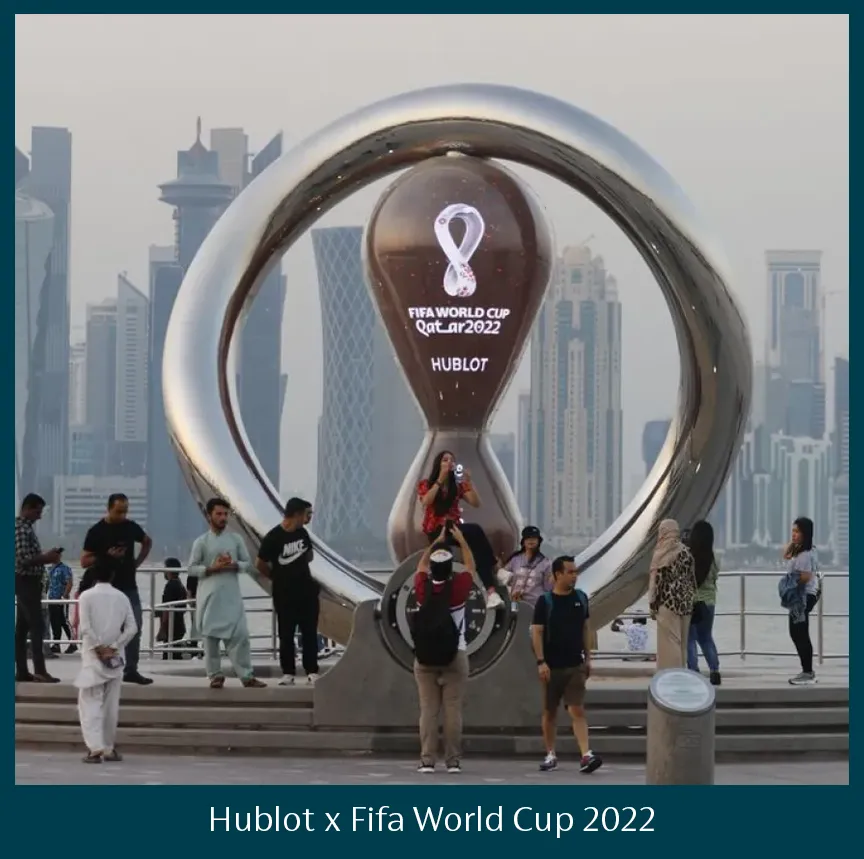
We have been keen and excited observers of this year’s World Cup, which, aside from amazing football, appears to be an interesting business case study for a variety of reasons. One observation concerns how we are seeing sponsorship evolve, as evidenced by this tournament. For the first time since 1978, the FIFA World Cup has been played without an official luxury timekeeper. Hublot, which held the position for sixteen years across four tournaments, ended its partnership in 2025. No house of comparable standing took the seat at the world’s most-watched sporting event. It could be a coincidence, a positioning statement, but it could also be the opposite: a signal, and a useful one for how we underwrite sponsorship and partnership decisions going forward.
The sponsorship money didn’t leave football. But it is increasingly finding avenues for diversification from merely supporting tournaments and events to teams and individuals.
Additionally, some of the most memorable moments from the event are not just the matches themselves, but the hospitality of the host country, the dynamic around the fan bases, the massive celebration mood and related experiences of the last few weeks, and the unifying spectacle of an authentic moment around a joint passion which has brought so many nations together.
These two signals, and how they affect the cultural and commercial value of sports for luxury brands, are the subject of this report.
The Market Signal: Individuals and Communities in addition to Institutions
The tournament carries an audience scale few platforms can match: over 1.4 billion cumulative viewers at the 2022 finale and an estimated $9 to $13 billion in FIFA revenue across the cycle. By any conventional media-buying logic, this should be the deepest and most contested sponsorship pool in sport. The vacated timekeeper position says otherwise.
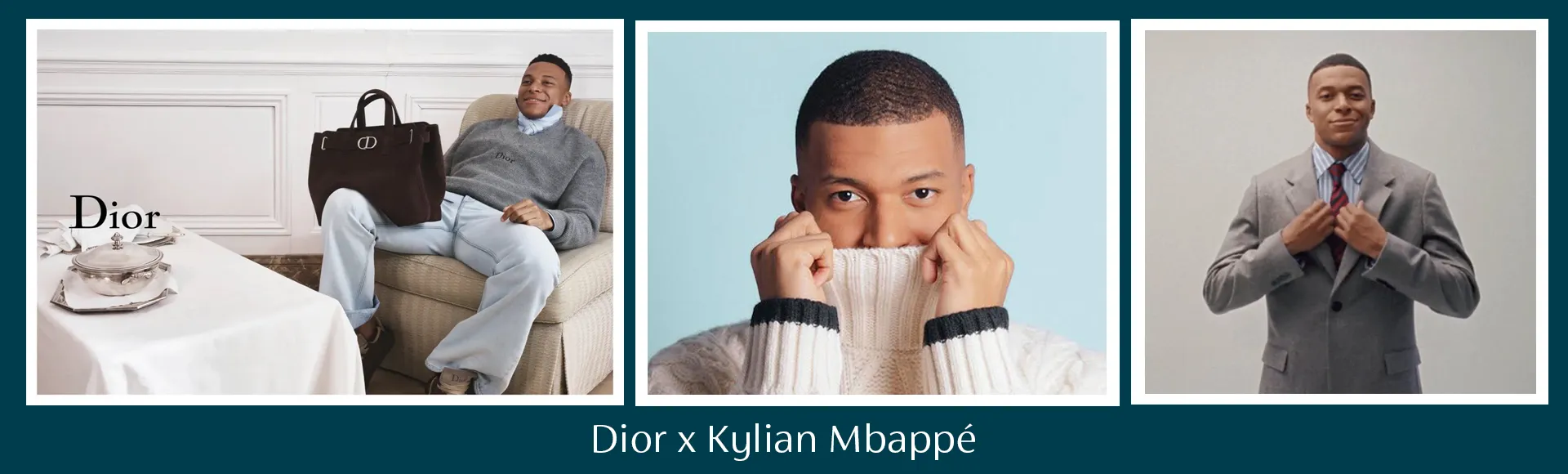
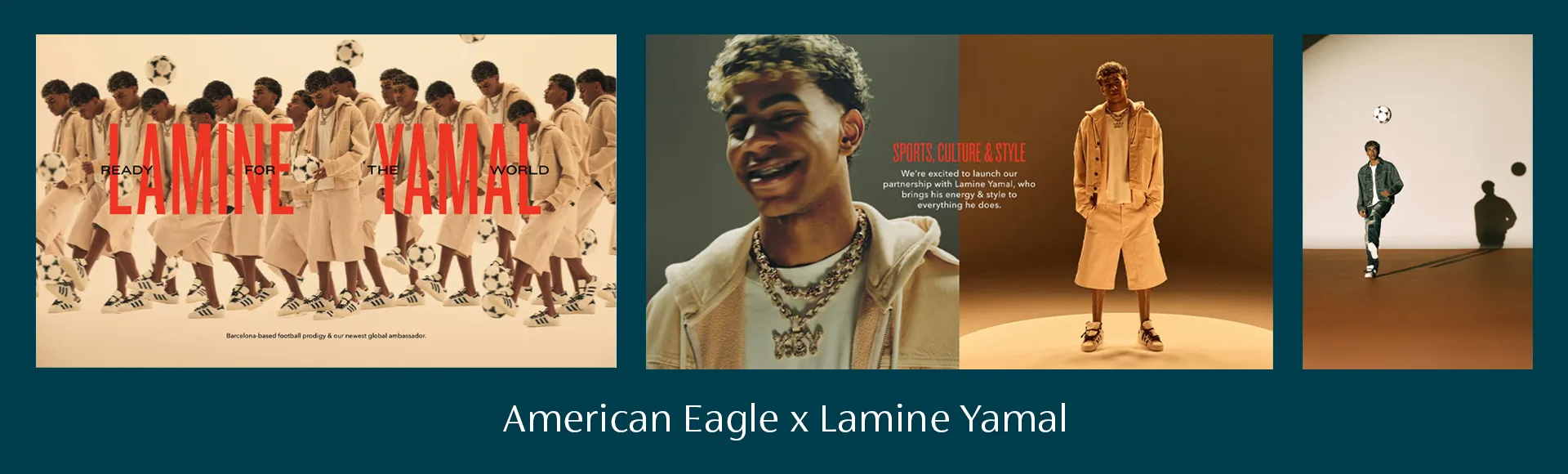
The capital is going in multiple directions instead: a strong signal of diversification. Dior signed Kylian Mbappé as a house ambassador. Louis Vuitton holds Jude Bellingham. American Eagle committed to an 18-year-old Lamine Yamal for five years. Gabriela Hearst, Loewe and Jacquemus are dressing sports teams. None of this is tournament sponsorship in the traditional sense; it’s a direct bet on individuals and teams (composed of individuals), structured to outlast the event by years. The logic is straightforward: a single elite athlete can now generate more daily engagement on owned and earned channels than a four-week tournament sponsorship can deliver, and that engagement lasts beyond the tournament, not expiring at the final whistle.
The key finding is that brand value in sport is increasingly shifting from the event alone to the person or persons as a conscious diversification strategy. That has real consequences for how brands think about partnership ROI, and for the risk profile they are willing to accept.
The CX Lens: What This Tournament Is Teaching Us About Designing Experiences
There is another signal in this tournament worth examining on its own terms, because it speaks directly to our core discipline rather than to sponsorship economics. Some of the most talked-about moments from this World Cup’s host cities have not been the matches. They have been unscripted hospitality moments, like a welcome sign at a state line, a neighborhood that embraced a 6 a.m. bagpipe serenade, a stranger offering to cook a visiting fan a home meal. None of it was designed by anyone, and that is precisely why it resonated at a scale paid campaigns could not match.
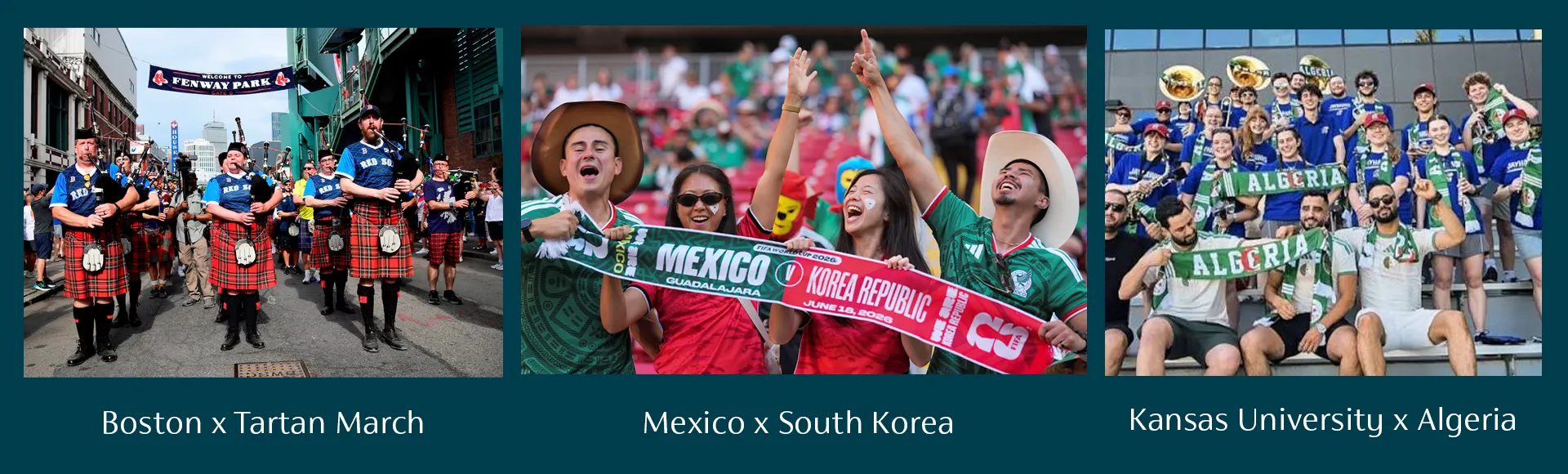
Structurally, this is almost a hospitality case study: anticipating a need before it is expressed, removing friction a visitor did not expect to encounter, making someone feel recognized rather than just like another face in the crowd. These are not scripted touchpoints. They are judgment calls, requiring emotional intelligence and soft skills, made by people with the latitude to make them, in service of a stranger’s experience rather than a transaction. The Japanese call this Omotenashi. That is, in our 20-year practice, the same standard we hold ourselves to when designing CX ecosystems for luxury clients.
This point is consistent with what we see in client engagements: while visitors will remember the final score, they will equally remember the volunteer who walked them to the right platform, the driver who recommended the right restaurant, the stranger who said welcome. Translated into luxury retail or hospitality terms, this is a familiar finding; clients rarely recall the product specs. They recall whether they were recognized, whether friction was resolved before they had to ask, whether the brand made them feel like a guest rather than a transaction. In short, they recall how a brand made them feel.
The idea seems to be that building systems flexible enough to let real human judgment produce the unscripted moment, rather than scripting interactions so tightly that nothing unscripted is possible. The brands and properties that perform best on experience metrics are the ones that have deliberately engineered latitude or freedom into frontline roles, so that an employee’s instinct to do right by a client isn’t constrained at the exact moment it matters most.
The lesson here is that the moment a brand tries to claim that authenticity through a campaign, the asset’s value disappears. The more durable strategy is to assess whether our own client-facing teams have the discretion to go off-script when an unanticipated need arises. That is a training and operating-model question, not a marketing one, and can carry real ROI.
Strategic Implications
1. Athlete equity is a different risk class than tournament equity
Institutional sponsorship is low-volatility and low-upside: predictable exposure, contractually bounded downside. Athlete partnerships are the inverse: there is higher upside through sustained, compounding engagement, but also the risk of exposure to controversy, injury, and the basic finality of a playing career. A five-year contract with an 18-year-old is a long-duration bet on the person as well as a specific persona. Brands need to treat these bets by sizing the position, diversifying across multiple athletes or markets, and building the relationship so it survives a bad season.
2. Verifiable authenticity carries a credibility premium no media buy can purchase
A similar logic around authenticity can be seen in this tournament’s coverage of host cities: visitors are witnessing unscripted warmth, communities are responding in kind, and none of it is staged or preplanned. The reason is that audiences respond to what they can verify happened on its own, not to what was produced for them. They have a laser-sharp antenna for authenticity. The strategic implication is the same in both cases: borrowed cultural capital retains its value only if a brand remains additive to it rather than extracting from it. The moment an association is perceived as contrived, it loses its resonance.
3. Build KPI around durability, not only reach
Reach metrics from a mega-event are easy to measure and easy to overemphasize. The more useful question concerns durability: does this partnership, campaign, or association generate value that persists beyond the tournament window? Athlete partnerships, if executed well, can often pass this test by design. Pure tournament sponsorships may or may not be meaningful data points that brands should evaluate when making their decisions.
Looking Ahead
For our own brands and client advisory work, the lesson is consistent across all three pillars here. There is clear potential for athlete partnerships to outperform tournament sponsorships because they’re durable rather than time-limited. Unscripted hospitality outperforms paid campaigns because it’s authentic rather than produced. And the experience moments clients remember are the ones built on frontline discretion, not on strict scripts. The common factor running through these themes is that value lies in what is real and durable, not in what is loud and temporary.
As we evaluate sponsorship strategy and advise clients on experience design in the future, the conversation should be less about how many people will see a campaign or a moment and more about whether what they see or feel will stay with them and still mean something a year from now or beyond.