CXG Luxury Retail Beat – Q3 2025
The Role of Frontline Advisors in Driving Luxury Retail Performance





As luxury brands navigate shifting consumer expectations and an increasingly complex retail landscape, one performance lever continues to prove decisive: the in-store human experience. Beyond product desirability, brand positioning, and marketing power, it is the quality of interaction between client and advisor that increasingly determines commercial success. CXG’s Q3 2025 Luxury Retail Beat reveals that frontline advisors are not simply the face of luxury retail; they are its primary growth engine.
At the core of this dynamic lies CXG’s proprietary Purchase Intention Index, which measures how customer experience shapes buying intent and overall brand performance. Clients are asked: “Based on your experience with the Advisor, which of the following statements best describes your intent to buy at this store?” The results provide a direct view into how human interaction influences sales outcomes across global luxury markets.

A Softening of Purchase Intention in Q3 2025
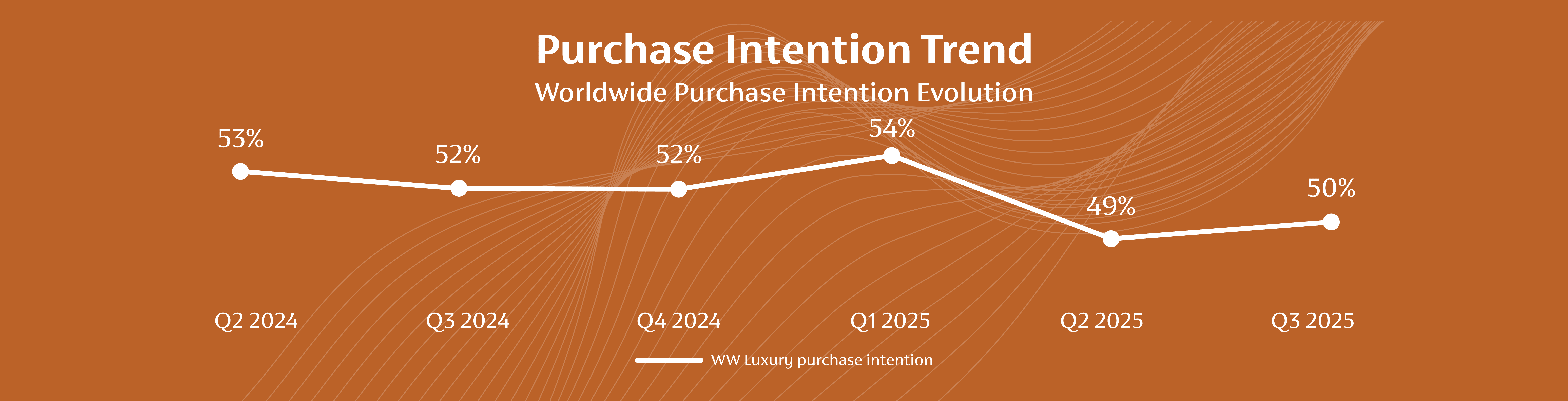
Compared to Q3 2024, overall luxury retail purchase intention experienced a slight decline, dropping from 52% to 50% in Q3 2025. While this shift may appear marginal, it masks significant variations between sectors.
The luxury cosmetics segment emerged as the primary driver of this decline, recording a 5-point drop year-over-year. This decrease was consistent across skincare, makeup, and fragrance. In contrast, luxury fashion and watches & jewelry showed stronger performance, with purchase intentions improving compared to the same period last year.
While macroeconomic pressure may have dampened discretionary spending in beauty, CXG’s analysis suggests that the decline is not purely market-driven, it is also rooted in the evolving nature of in-store experiences.
The Emerging Human Experience Gap in Luxury Beauty
Clients visiting luxury beauty counters in Q3 2025 reported a noticeable shift in advisor behavior compared to the previous year. Several critical elements of the luxury service experience showed signs of weakening:
• A decline in perceived sincerity and proactivity from advisors.
• Fewer client-centric questions designed to uncover individual needs.
• Reduced persuasive ability when guiding clients toward purchase decisions.
These findings suggest that the drop in cosmetics performance is not only about product or price sensitivity. It reflects a growing human experience gap, where the emotional and relational dimensions of luxury service are not being fully delivered.
This trend is echoed in gender-based insights. Female luxury customers, in particular, are showing lower purchase intention compared to Q3 2024. Many report feeling less understood, supported, and proactively engaged in-store — a significant concern, given that client centricity is traditionally a defining strength of the luxury experience.
Regional Divergence: Japan and Europe Under Pressure
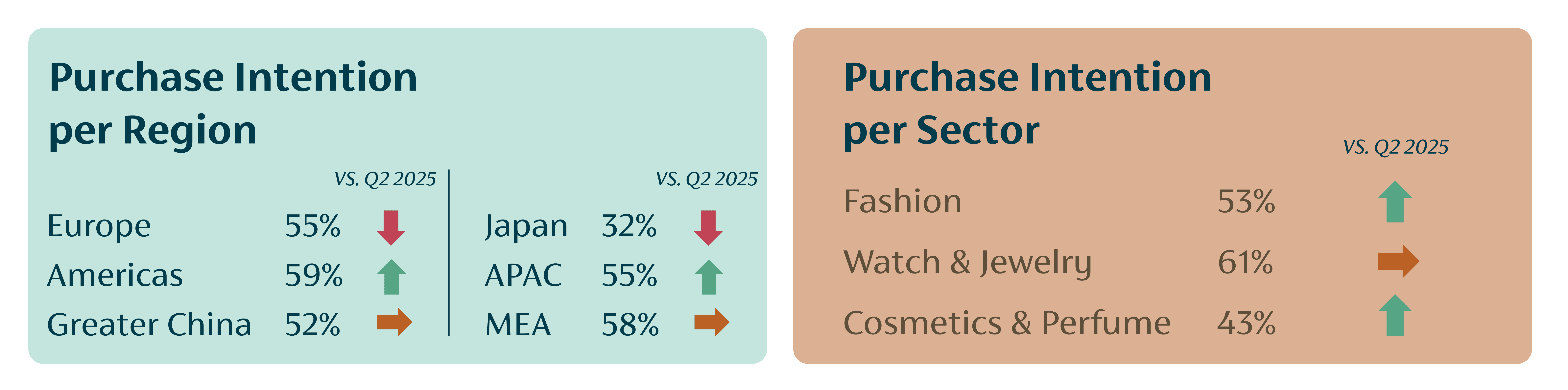
When compared to Q2 2025, regional divergences have become increasingly visible. Among all major luxury markets, Japan and Europe are the only two regions showing a decline in purchase intention quarter-on-quarter.
Japan stands out most sharply, currently positioned 18 points below the global average, making it the lowest-performing luxury market in terms of purchase intention.
While cultural elements may account for part of this gap, CXG’s analysis points clearly to differences in in-store execution. In Japan, client advisors were observed to:
• Show lower intent to build personal connections.
• Ask fewer client-centric questions.
• Demonstrate less proactivity in introducing additional items.
• Display weaker product expertise during interactions.
These service gaps align closely with the observed slowdown in both customer experience performance and revenue growth in the Japanese luxury market, reinforcing the direct link between human interaction quality and commercial outcomes.
What Truly Drives Luxury Purchase Intention
Across all sectors and regions, CXG’s data highlights one consistent truth: luxury purchase intention is deeply human-centered.
The strongest drivers of intent are not rooted solely in product innovation or brand equity, but in the advisor’s role as both brand ambassador and trusted guide. The most influential behaviors include:

• A consistently warm and confident attitude
• Proactive engagement that creates emotional momentum
• Personalized conversations that make clients feel seen, understood, and valued
High-performing advisors do not simply sell products. They orchestrate experiences. In luxury, the emotional quality of the interaction often matters more than the technical attributes of the product itself.
Creative Leadership Shifts: Impact Delayed at Retail Level
The luxury industry is currently undergoing a transformative wave of creative change. Since 2024, many major luxury houses have appointed new Creative Directors, with their first collections only now reaching the runway and expected to enter boutiques towards the end of 2025.
CXG’s analysis comparing brands that have experienced creative leadership changes versus those that have not shows no significant positive or negative impact yet on either customer experience or purchase intention. This is largely due to timing; the new collections are not yet fully present in-store.
However, an early signal is emerging from the frontline: client advisors appear less confident in their storytelling and product presentation following these transitions.
As creative identities evolve, brands face a critical operational challenge: ensuring that frontline teams are fully equipped to convey new narratives with clarity and conviction. Strengthening training and internal alignment could be the bridge that transforms creative innovation into commercial performance.
Conclusion: The Human Advantage in Luxury Retail
In a world of shifting trends, economic pressure, and creative reinvention, CXG’s Q3 2025 Luxury Retail Beat makes one reality unmistakably clear: luxury performance is shaped by people.
The frontline advisor is no longer a supporting function — they are the decisive factor in whether aspiration converts into action, and whether brand promise becomes lived experience. For luxury brands seeking sustainable growth, investing in human excellence may be the most strategic move of all.