Beyond the Gift Box
How Luxury Brands Are Redefining Holiday Experiences in 2025





The holiday season has always been luxury’s golden hour when heritage meets aspiration, and consumers are most willing to invest in premium experiences and products. But 2025 marks a departure from the traditional playbook. As consumers grow weary of cookie-cutter celebrity campaigns and predictable discount cycles, luxury and premium brands have discovered that true engagement comes not from shouting louder, but from creating moments that feel genuinely memorable, personally relevant, and culturally resonant.
This year’s holiday landscape shows some cognitive dissonance: while marketers expect spending to rise, only a small percentage of consumers share that optimism. In this cautious climate, the brands succeeding are crafting experiences that transform transactions into stories worth sharing.
The Return to Storytelling: Nostalgia Meets Modern Authenticity
The most striking trend dominating luxury’s holiday 2025 campaigns is what industry insiders are calling “thoughtful nostalgia”. It’s a deliberate embrace of traditional holiday aesthetics but filtered through contemporary sensibilities that feel very inclusive.
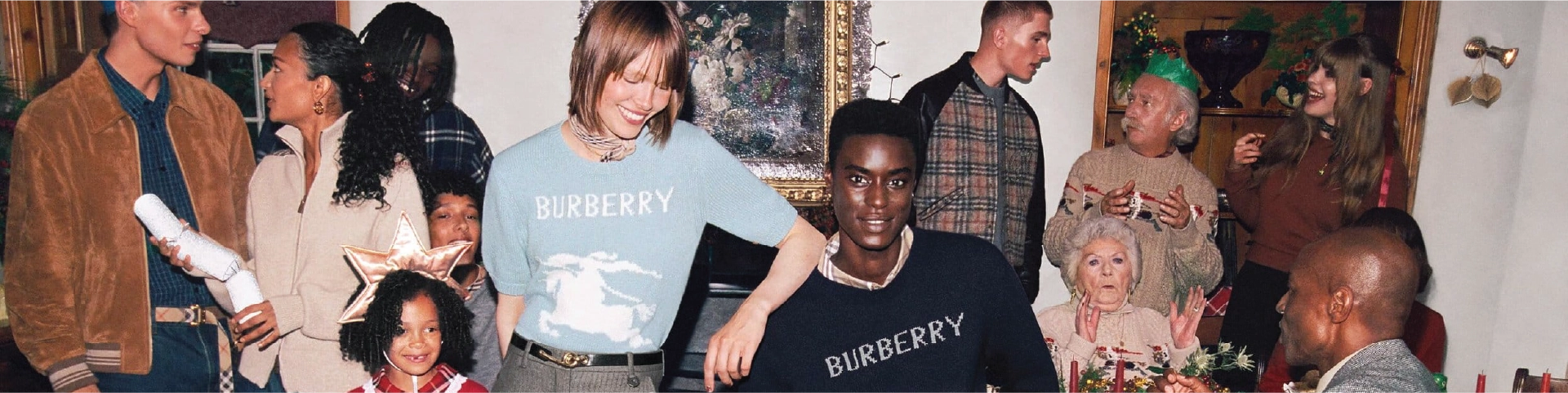
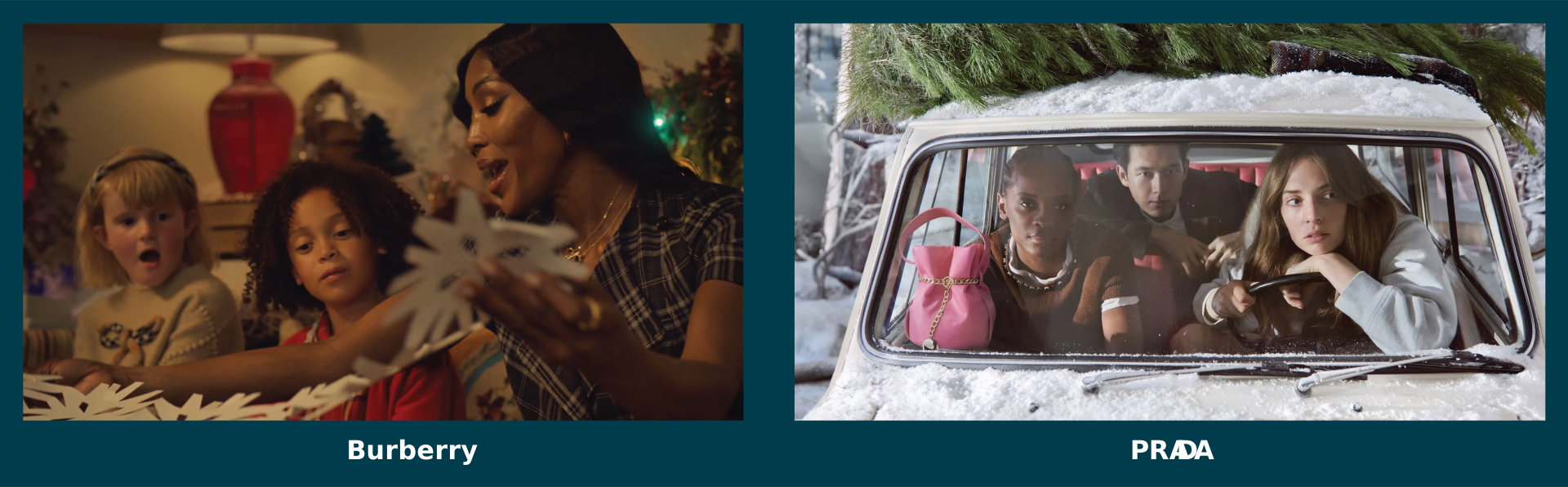
Burberry’s holiday campaign exemplifies this approach brilliantly. Starring British comedy legend Jennifer Saunders alongside Naomi Campbell, Ncuti Gatwa, and Rosie Huntington-Whiteley, the brand presents a cozy London townhouse gathering that feels simultaneously timeless and refreshingly diverse. This isn’t your grandmother’s Christmas party, although it does evoke the same warmth and congeniality.
The strategic genius lies in how these campaigns tap into Gen Z’s documented craving for comfort and familiarity. The viral “Ralph Lauren Christmas” trend signals a generational appetite for heritage luxury that feels earned rather than manufactured. Ralph Lauren capitalized on this by doubling down on American West imagery, outdoor black-tie dinners in the mountains, tartan tablecloths, and suede jackets, blurring the line between fantasy and lived memory.
Prada took a cinematic approach with their campaign, captured by Glen Luchford and featuring Maya Hawke, Damson Idris, Louis Partridge, Letitia Wright, and Li Xian. The narrative follows a chosen family on a winter automobile journey through pristine snowscapes, a universal experience of homecoming that transcends cultural boundaries. It’s storytelling that feels both epic and intimate, offering viewers a feeling of enchantment and true emotional resonance.
While these campaigns clearly leverage star power, it’s the deliberate choice to make celebrities feel like characters in a larger narrative rather than walking billboards. The approach modernizes heritage-heavy storytelling without falling into what some critics call “trad wife” territory. Humor helps tremendously. Brands keeping nostalgia entertaining rather than earnest are resonating most strongly with younger audiences who value authenticity over aspiration.
Experiential Luxury: From Screens to Streets
While beautiful campaigns capture attention online, the brands truly engaging customers in 2025 are bringing those stories into physical spaces through experiential marketing that feels personal rather than performative.
In Singapore’s Raffles City, Dior Beauty’s Circus of Dreams installation starts with the Parfums Christian Dior Christmas Tree at Art Square and continues with the brand’s main beauty pop-up. Here you can experiment with the various fragrances in Dior’s library of fragrances and enjoy complimentary popcorn and drinks.
This reflects a broader trend in experiential marketing: brands are shifting from spectacle-driven activations to intimate, customizable moments. The most expensive mistake in experiential marketing isn’t a failed event, but being forgettable. In an era when so many brands use digital and social media advertising for holiday campaigns, standing out requires giving people something they can’t scroll past: a real-world experience that becomes content they want to create themselves.
The Ritz Carlton in Paris has executed their own holiday brand activation by installing a 2.5-meter giant Teddy Bear sculpture and a gourmet pop-up shop at their location on Place Vendôme, which will last through January 4th. This delightful activation includes signature hot chocolate and exclusive sweets, as well as a shop dedicated to the hotel’s iconic teddy bear mascot merchandise.

This trend is going beyond flagship activations. Ferragamo’s campaign, celebrating their history with wrapping paper, touching on times when the founder crafted shoes from candy wrappers out of scarcity, demonstrates how even packaging can become an experience. Their focus on this detail underscores a commitment to refinement that transforms every touchpoint into something worth noticing. As they say, the devil is in the details.
The Sustainability Imperative: Genuine Impact Over Greenwashing
A critical shift in 2025 luxury holiday marketing is the move from sustainability optics to demonstrable environmental commitment. Legislative changes across the United States, Canada, Australia, and the EU are pushing brands to back up claims with measurable action. We know that younger audiences are actively verifying sustainability practices before purchasing. This means zero-waste events, carbon-neutral production processes, and transparent supply chains are no longer optional differentiators but baseline expectations. Brands creating immersive experiences must demonstrate real environmental commitment, whether through biodegradable packaging, locally sourced materials, or circular economy principles.
Tod’s Holiday 2025 collection, featured in “The Holiday Express” film aboard La Dolce Vita Orient Express, emphasizes Italian manufacturing heritage and long-term value through workmanship and longevity. Rather than a spectacle-driven drop, their approach reinforces dependable craftsmanship; luxury that lasts rather than luxury that merely looks expensive. The clip is reminiscent of scenes in the “The Grand Budapest Hotel” by Wes Anderson with a humorous, tongue-in-cheek nod to his directorial style.
Tiffany & Co. positioned their “Love Is a Gift” campaign starring Anya Taylor-Joy not around products but around the universal expression of love that their jewelry represents. They’ve reaffirmed their status as the quintessential gifting destination by focusing on emotional storytelling rather than transactional messaging.

Coach created “The Gift for New Adventures,” featuring Elle Fanning, Charles Melton, and others in a campaign that positions their bags as companions for wintertime experiences- ice skating, party hopping, and train journeys. The genius lies in making the product integral to life moments rather than separate from them.
Chanel’s Winter Tale takes magical realism to sophisticated heights. Model Vittoria Ceretti stands on a Haussmannian balcony as a narrator explains, “There once lived a girl in a land without snow.” It’s a subtle but radical hint at climate change wrapped in fairy tale aesthetics, making contemporary concerns feel timeless rather than preachy.
Strategic Holiday Thinking
Interestingly, the most sophisticated holiday 2025 strategies involve rethinking when “holiday” actually happens. Extensive data is driving smarter brands to extend their holiday cycles, building momentum ahead of peak weeks and pushing past the traditional cutoff to extend buying cycles. The approach isn’t about abandoning the holiday moment but about maximizing its value through intelligent timing rather than simply pouring money into the most crowded days.
Fragrance brands particularly are embracing this extended timeline through experiential activations dispersed across the season. Rather than concentrating efforts around Black Friday, they’re creating scent experiences in public spaces throughout November and December, building sustained engagement that feels less transactional and more relationship-oriented.
Smaller Budgets, Smarter Execution
As we move deeper into the holiday 2025 season, the clearest lesson is that luxury’s competitive advantage lies not in bigger budgets but in smarter execution. The brands creating genuine customer engagement aren’t those with the most celebrity partnerships or the highest ad spend, they’re the ones crafting experiences that feel personally relevant, culturally resonant, and genuinely worth sharing.
The holiday season remains luxury’s most important period, but success now requires moving beyond traditional campaign thinking into something more holistic: brand worlds that invite customers in rather than shouting at them from billboards, experiences that generate organic advocacy rather than requiring paid promotion, and values that resonate year-round rather than only when shopping peaks.
This invitation to join brand worlds is the precursor to the customer journey which continues in-store, online and across so many other experiential touchpoints. After this first step, it behooves brands to deliver an actual customer experience that matches the promise made during marketing: of romance, emotional resonance and celebration.