Are Very Important Clients (VICs) the Future of Luxury?





Are Very Important Clients (VICs) the Future of Luxury?
Major luxury Maisons place, significant reliance on their Very Important Clients (VICs) and have become overly dependent on them. At the same time, accessible luxury is suffering in the current economic climate. Fortunately, there is a neglected eldorado in the industry: the middle, or “Core” segment, which can represent up to 30% of revenue. This is one of the key insights from CXG’s study The Loyalty Code.
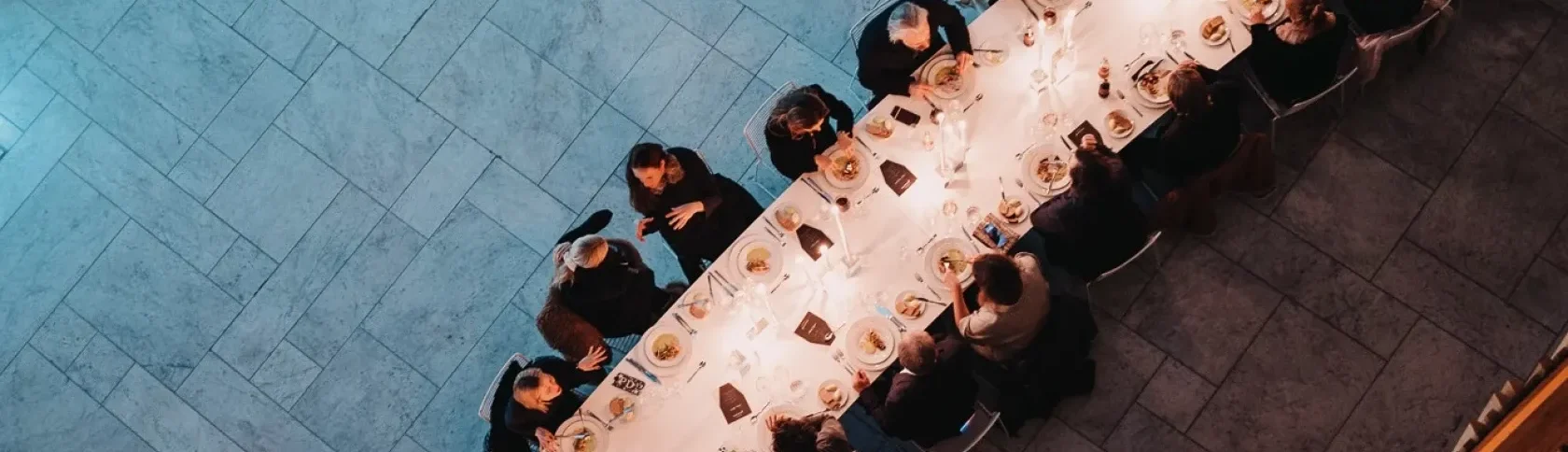
Some mornings, the luxury industry seems to look at itself in the mirror with rare clarity. That was the case last October, in the lounges of the Peninsula Paris, where CXG unveiled its new study dedicated to client loyalty, following Decoding China (2023) and The Client Advisor Effect (2024). The event was packed: more than 200 executives from iconic luxury houses, retail leaders, and a rising generation of strategists eager for faint signals. “The value of our studies is that they often go against conventional wisdom,” said Christophe Caïs, CXG’s founder and CEO, before opening the conference.
While traditional luxury strategies in recent years have focused on VICs, who make up less than 3% of clients yet account for 30 to 40% of revenue, brands often overlook the customer base that is deeply emotionally engaged, active, and loyal. According to CXG’s experts, this Core segment represents more than 20% of overall activity. How can brands address this? By refining segmentation, developing tools centered on human connection and personalized interactions, leveraging the expertise of client advisors, accelerating personalization and recognition, and rewarding loyalty within this segment.
Beyond its findings, CXG’s study on hyper-demanding premium consumers and the future of client experience examines the depth of their engagement and loyalty. From the outset, the message was clear: there was no triumphalism, despite another strong year. “Luxury is not in crisis, but its customer is changing faster than the industry,” said Silvia Coleman, CXG’s Vice-President, Market Intelligence & Strategic Growth, highlighting a sector facing a far deeper transformation than it is willing to acknowledge.
Luxury has its rites, its codes, and its high clergy. In recent years, it has increasingly focused on its most devoted followers: VICs. Though they represent only around 3% of global buyers, these Very Important Clients account for nearly half of the industry’s commercial performance—modern-day patrons, in a way. Yet in elevating its wealthiest parishioners, luxury may have lost sight of the rest of the cathedral.
This is the unvarnished diagnosis presented by CXG in The Loyalty Code, which exposes an industry now dependent on its most aristocratic tier. VICs may reassure brands in turbulent times, but they are also… exhausting. Demanding, courted endlessly, accustomed to negotiation down to the final stitch. The study, based on thousands of international interviews and qualitative benchmarking, shows that high-end consumers are no longer merely demanding, they have become insatiable. They compare, verify, test, question, and then, sometimes, validate what they deem worthy of their attention.
Meanwhile, another audience—more discreet, more stable, often more sincerely attached to brands—remains stuck in luxury’s waiting room: the Core segment. A strategic reservoir, still underutilized, yet responsible for as much as 30% of revenue. In a normal market, this would be obvious. In luxury, it resembles a statistical anomaly.
Christophe Caïs summarizes the paradox: “VICs overload brands and capture all their attention. Meanwhile, a loyal, profitable, emotionally bonded segment receives a standardized service, and leaves.” And when they leave, it is rarely impulsive. The study reveals that 70% of lost clients walked away due to a lack of personalization. More concerning: the global luxury customer base has shrunk in one year from 400 to 350 million people. And 58% of surveyed clients admit they have already “broken up” with a brand. The reasons: prices deemed excessive, inconsistent experiences, sometimes unworthy of the amounts spent.
However, regional sensitivities differ. In the U.S., clients resent a service level proportional to spending power. In China, they demand emotional tailor-made experiences. In Europe, people value long-term relationships with advisors, luxury here remains a matter of human loyalty. In the Gulf countries, expectations border on cultural ritual: recognition is not a bonus, it is an obligation.
Faced with this mosaic of expectations, CXG calls for a silent revolution: re-establishing relational continuity. In other words, continue pampering VICs while building a true second circle: visible, rewarding, and aspirational, for the Core segment currently lost between the boutique and indifference. “This is not about diluting VIC programs,” insists Caïs, “but about equipping this segment with concrete benefits and a path for progression. If treated as a strategic asset, it converts a costly paradox into a competitive advantage.”
Luxury doesn’t only have a desirability problem. It has a loyalty problem and a discreetly hierarchical one. In the past, the industry seduced broadly and then consolidated its elite. Today, it has locked itself into an obsession with the ultra-wealthy, risking forgetting that luxury, to thrive, must still speak to a broader audience of privileged buyers. Perhaps it is time to remember that in luxury, as elsewhere, loyalty cannot be bought. It must be cultivated.
The main conclusions, presented with analytical restraint, converge on one truth: customers no longer buy a brand; they buy a relationship. “We are no longer in the era of the product, nor even that of the experience: we are entering the era of attachment,” emphasized a CXG consultant, supported by data. This attachment, cognitive, emotional, and cultural becomes the key indicator of long-term loyalty.
The study also highlights the rise of a “paradoxical consumer,” summed up in a single sentence: “They want to be surprised, but they tolerate no mistakes.” On one side, a craving for constant novelty; on the other, a near-clinical expectation of perfection. A senior jewelry executive present at the event confessed: “We now have to be disruptive without frightening, modern without dividing, fast without rushing. It’s a tightrope act.”
Operationally, CXG emphasizes the crucial role of in-store teams, calling them “the primary intangible assets of luxury brands.” The data shows a structural shift: a significant portion of customer frustrations are not product-related, but linked to listening quality, advice, and support. Participants reacted strongly to statistics showing that 40% of surveyed premium clients feel that “sales associates do not know me well enough,” even after years of loyalty.
The study also devotes substantial attention to digital—not as a sales channel, but as “the natural extension of client care.” Far from the usual discourse on omnichannel transformation, CXG advocates a more precise view: “Digital is not a substitute; it is a continuation. It should not simplify; it should deepen.” The message is clear: luxury shouldn’t try to imitate tech giants but rather translate into the digital world what makes it strong in the physical one: detail, precision, and consistency.
More than ever, luxury must move beyond superficial innovation narratives and return to what it has always mastered: cultivating a rare form of attention to the world. And if there is one final takeaway from this study, it may be this: “The future of luxury does not lie in the extraordinary, but in the flawlessly mastered exceptional.” A demanding path, as always. But perhaps the one luxury knows best how to walk.
Originally Published in French in L’opinion.


