Beyond the Sale
Who Holds the Luxury Automotive Client After the Keys Are Handed Over?



Luxury automotive brands invest heavily in the moment of sale: design, showroom experience, and product storytelling. Then most hand the client relationship to a network of independent, franchised dealers. In our latest report, Beyond the Sale: Who Holds the Luxury Automotive Client After the Keys Are Handed Over?, we examine what happens next, and why even manufacturers whose brand promise rests on exclusivity and personal care continue to underinvest in the lifetime value of the ownership relationship.
The franchised dealer model was built to solve a distribution problem, not a relationship problem. The OEM owns the brand, but the dealer owns the client relationship, and the two operate on different horizons: the brand wants loyalty over a lifetime, while the dealer is measured on margin within a territory. In practice, sales incentives stop at the signature, aftersales is designed for workshop throughput rather than relationship-building, and customer relationship management (CRM) data is often dealer-held, leaving the manufacturer with limited visibility into post-delivery sentiment and churn risk. Direct-to-consumer EV players such as Tesla, Rivian and Lucid have made this tension impossible to ignore, resetting what luxury car buyers expect, including those who still buy through a dealer.
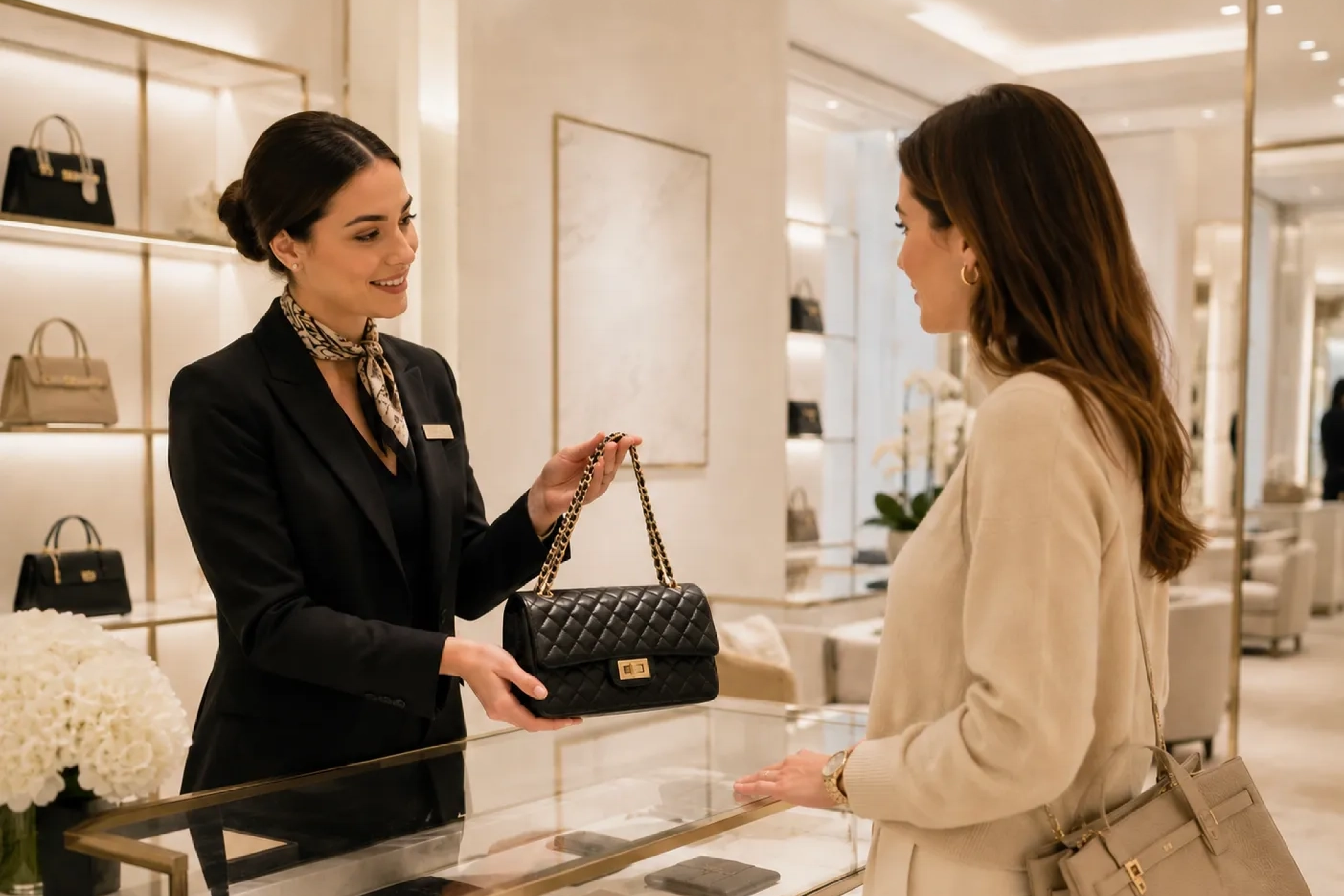
Across roughly 100,000 in-store evaluations conducted each year for more than 200 premium and luxury brands, we assess the client experience against six dimensions: hosting, connecting, revealing, inspiring, seeing the relationship long term, and following up. Many brands design, train, and measure against all six in the showroom. Ownership is rarely measured against any of them. Yet luxury clients do not file their experiences by sector. The standard set by a private bank, a hotel, or a fashion boutique is the standard they bring to a service appointment. When that standard is missed, the result is rarely a complaint. It is indifference, and indifference surfaces years later as a renewal that quietly goes elsewhere.
The ownership lifecycle is also full of moments where loyalty can compound. Porsche turns delivery into an emotional high point through the European Delivery Program at Zuffenhausen. Genesis makes the first service visit proof of a luxury commitment with at-home valet service. BMW Proactive Care uses real-time telematics to reach owners before a dashboard warning does. Maserati’s Tridente membership program and Aston Martin’s tiered experiences keep owners close to the brand, while Rolls-Royce keeps the next purchase inside the existing relationship through the Whispers owners’ platform and the Private Office, where more than 100 bespoke commissions have originated from the Dubai studio alone. The commercial case is clear at Ferrari: in 2024, 81% of new Ferraris went to existing owners, and a Morgan Stanley estimate cited in MIT Sloan’s 2025 Ferrari case attributed 80% of revenue and 86% of EBITDA to repeat customers.
To close the gap, we identify four interconnected levers for luxury automotive brands: a single point of relationship accountability from delivery to the next purchase, dealer and advisor incentives that reward retention alongside volume, shared client history and context across the network, and service advisor capabilities built around the relationship rather than the repair. The cost of getting it wrong sits with the brand. A client who feels forgotten after the handover associates that experience with the name on the building and the hood, not the dealership where it happened. The question is whether the relationship promised at the point of sale still holds ten years later.
Download the full report by filling out the form below to explore the complete findings.