CX Luxury Retail Beat – Q1 2026
Purchase Intention: Why customer conviction is the new conversion challenge


Luxury retail opened 2026 with a more complex picture than the full-year 2025 trend suggested.
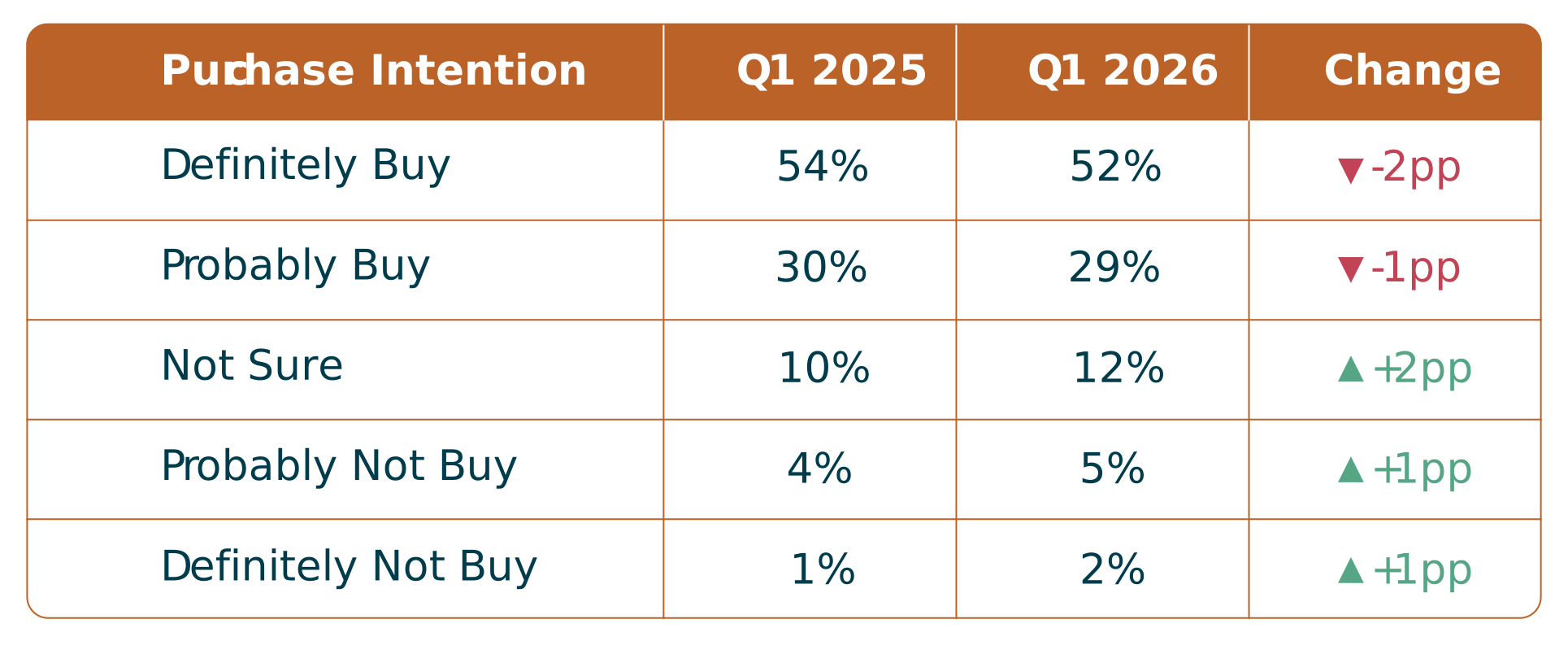
Across 10,000 luxury retail evaluations, 52% of customers said they “Would Definitely Buy” based on the interaction with the Sales Advisor after their store experience in Q1 2026.
This represents a 2-point decline versus Q1 2025, when (definite) Purchase Intention stood at 54%. The message for luxury brands is clear: the challenge is no longer only about whether advisors engage. It is about whether they create enough confidence, emotional connection, and perceived value to turn interest into certainty.
Global Purchase Intention Softens Year-Over-Year
In Q1 2026, customer intent remains broadly positive, but less decisive than one year ago.
The Core Insight
Advisors are doing more, but customers are not always feeling more convinced. This is the defining tension of Q1 2026. Advisors are more active, but their influence is under pressure. Q1 2026 shows clear improvements in several advisor behaviors linked to selling activity.
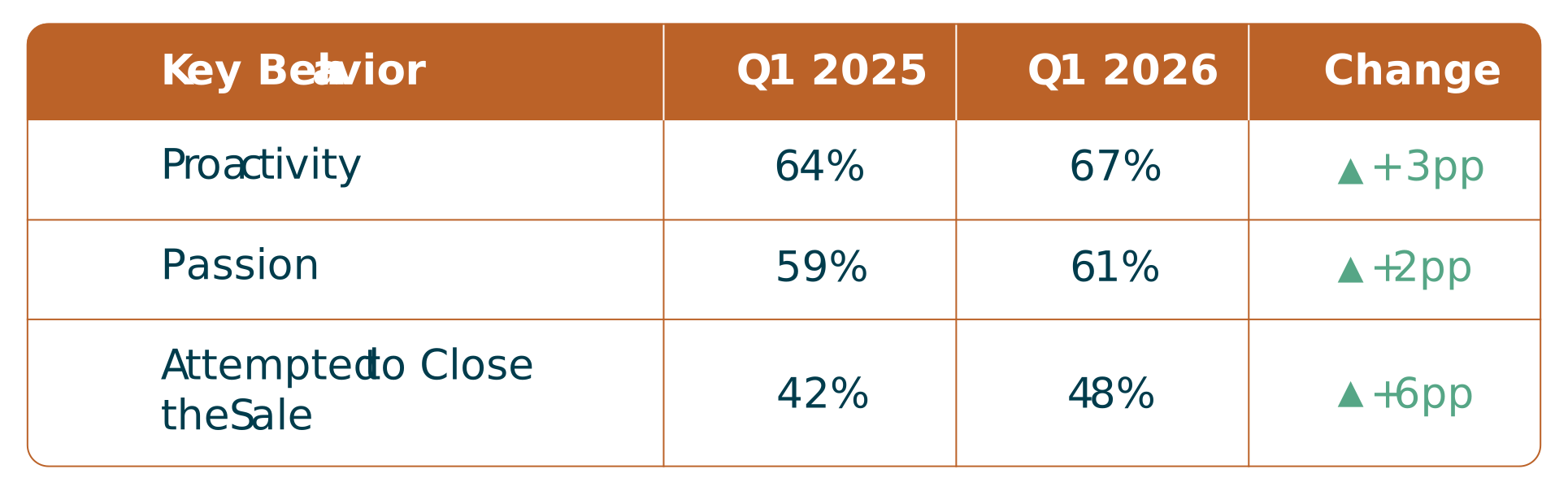
The greatest improvement is in attempting to close the sale, which rose by 6 points year-on-year. Advisors are making more effort to guide customers toward a decision. Yet the Advisor Index declined from 54% to 52%, mirroring the decline in Purchase Intention.
This suggests that the issue is not simply a lack of sales activity. Instead, it points to a subtler challenge: advisors may be more active but not always more persuasive.
A closing attempt only works when it is supported by the right emotional and commercial foundations: understanding the customer, building trust, telling the brand story, explaining product value, and making the recommendation feel personally relevant.
The Reasons Purchase Intention Falls Short
The reasons behind non-purchase are more revealing. In Q1 2026, the top barriers remain deeply advisor-driven.
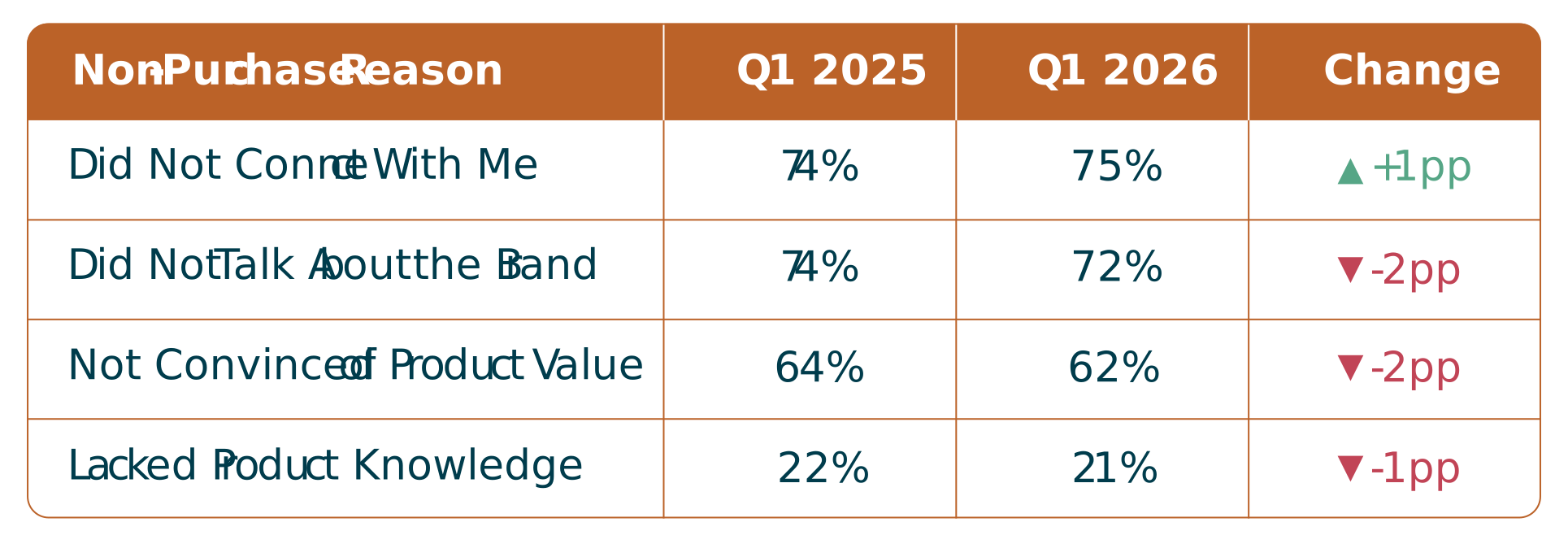
The leading barrier in Q1 2026 is “did not connect with me,” which rose to 75%. This is closely followed by “did not talk about the brand,” at 72%. These results show that customers are not only evaluating the product. They are evaluating the experience around the product. When advisors fail to create a personal connection, bring the brand into the conversation, or make the product’s value feel meaningful, customers are less likely to leave with strong purchase intent.
The implication is clear: Luxury conversion is not lost only at the moment of closing. It is lost earlier, when the advisor fails to build desire, trust, and relevance.
Regional performance: a divided global picture
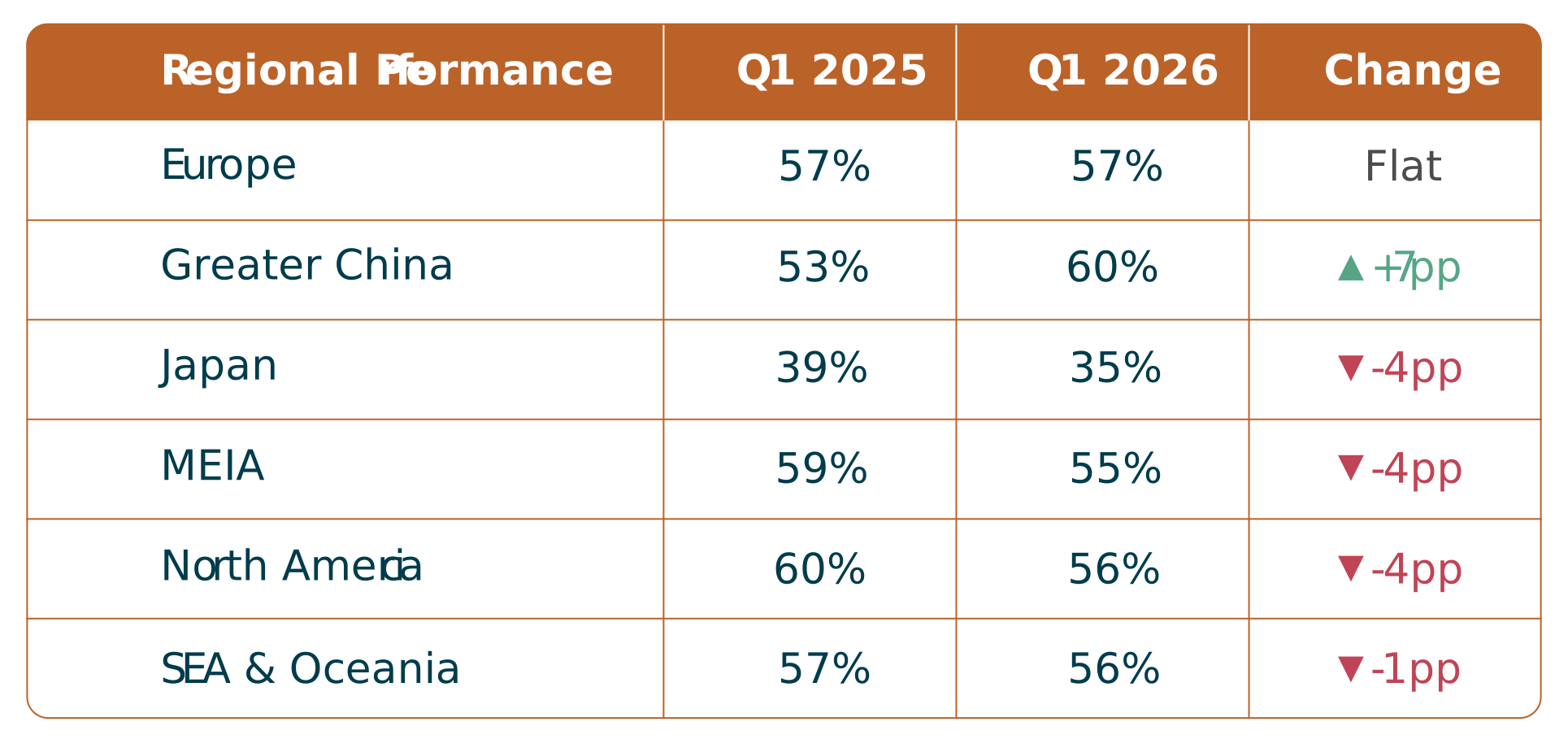
The global decline masks big regional differences. Q1 2026 is not uniformly weaker; it is more polarized.
The Strongest Momentum
Greater China is showing signs of recovery, moving from 53% to 60%. This points to renewed customer confidence, supported by stronger advisor influence and more effective store interactions. This aligns with early signals from several luxury groups’ Q1 financial reports, in which performance in Greater China improved after a period of sharper decline. Customers are responding to positive attitude, better product relevance, and more proactive service. These elements suggest that store interactions are becoming more effective at rebuilding purchase conviction. For luxury brands, this is an encouraging signal that the market is moving beyond traffic recovery and into a more meaningful improvement in retail conversion.
Together, these markets show that momentum is returning, with advisors creating more relevant, confident, and persuasive interactions.
The Pressure Points
MEIA declined, moving from 59% to 55%. While the region remains above the global average, Q1 2026 was marked by a more challenging operating environment, particularly around March, with geopolitical tensions affecting business conditions in parts of the region. In this environment, the decline should be read not only as an experience challenge, but also as a reflection of external pressure on store operations and customer confidence. PI Barriers are more pronounced: did not connect (93%), did not talk about the brand (91%), not convinced of the product’s value (73%), and passive advisor (72%).
Japan remains the most challenged region for advisor-driven Purchase Intention, with a decline from 39% to 35%. This is notable in a market where luxury demand appears resilient, suggesting the issue is less about appetite and more about converting interest into conviction. The main barriers point to an advisor-experience gap: did not connect 69%, did not talk about the brand 55%, and passive advisor 46%. The opportunity is to make interactions more personal, brand-led, and persuasive, helping customers move from interest to certainty.
Europe remained stable at 57%, while SEA & Oceania were broadly flat, moving from 57% to 56%. These regions show resilience, but not acceleration. Both regions maintained purchase conviction close to last year’s level, but without generating clear incremental momentum. In this context, stability should be read as a solid performance, but not yet as a growth signal. The opportunity for both regions is to move beyond consistency and create stronger differentiation through connection, inspiration, and value storytelling.
Overall, the regional story is one of divergence: some markets are gaining momentum through stronger advisor influence, while others are held back by weaker connection, brand storytelling, and customer conviction.
Sector performance: Watches & Jewelry leads, Cosmetics & Perfumes Weakens
Sector performance also reveals a divided picture.
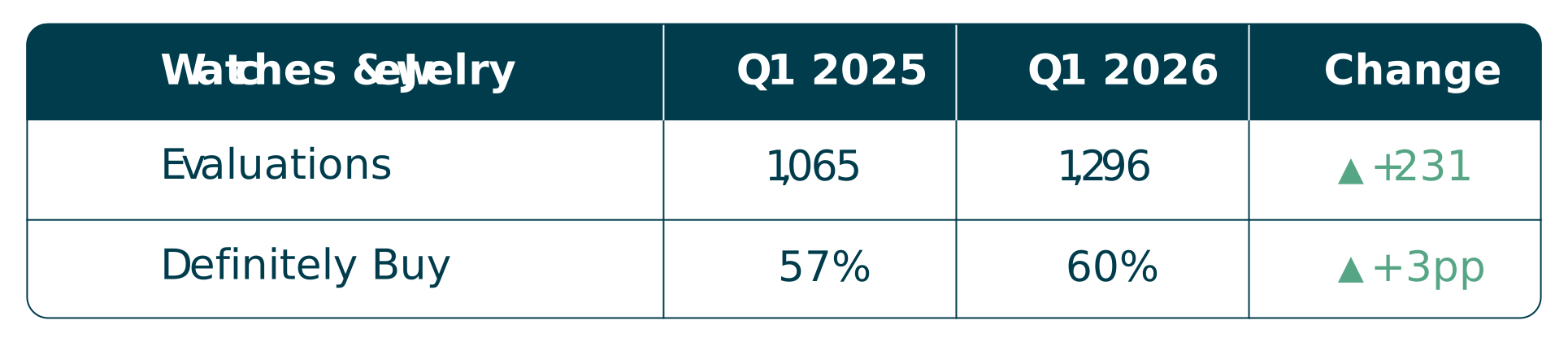
In Q1 2026, 60% of Watches & Jewelry customers said they would definitely buy, up from 57% in Q1 2025. This category demonstrates the power of advisor reassurance and expertise, especially in high-consideration purchases. When customers make significant investments, the advisor’s ability to build trust, explain value, and instill confidence becomes critical.
Watches & Jewelry is not driving the global decline. It is helping offset it.
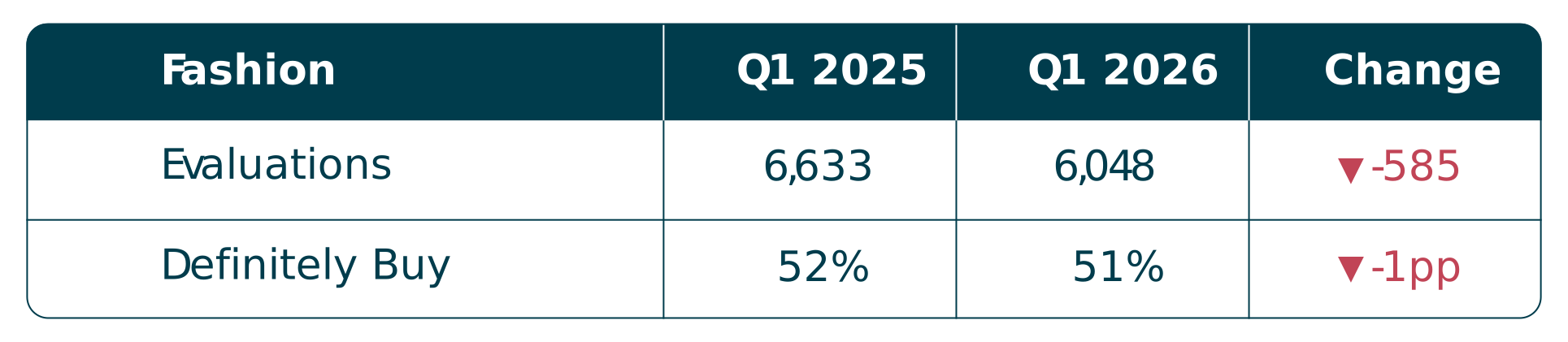
In Q1 2026, Fashion Purchase Intention stood at 51%, close to the global average. The opportunity for Fashion is to move from product presentation to personal curation. Advisors need to help customers understand why an item is right for their wardrobe, lifestyle, occasion, or identity.
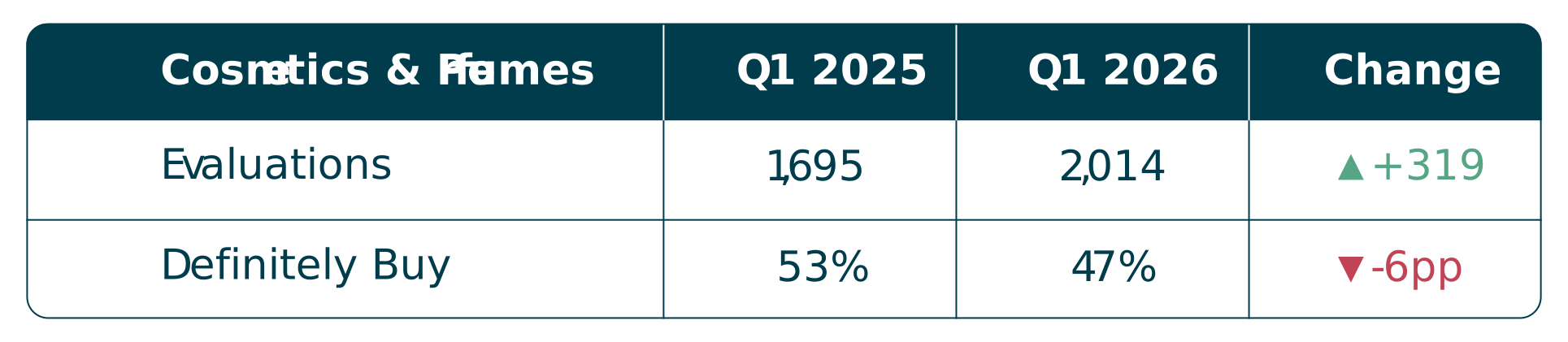
Despite a larger sample size, Purchase Intention fell by 6 points. This makes Cosmetics & Perfumes the most urgent sector challenge in Q1 2026. This category depends heavily on guidance, discovery, education, trial, and emotional resonance. Customers need advisors to simplify choice, personalize recommendations, and make the product feel relevant to their needs and desires. In Q1 2026, that influence weakened.
What Luxury Brands Should Do Next
Q1 2026 shows that the path to higher Purchase Intention is not simply to push advisors to close more often. Closing the sale has already improved. The real opportunity lies in improving the quality of influence before the close.
1. Move from Closing to Convincing
Closing behavior increased from 42% to 48%, but Purchase Intention declined. This means the commercial moment is happening more often, but it is not always persuasive enough.
Advisors need to build the close through stronger discovery, better product relevance, clearer value explanation, and greater emotional engagement.
2. Make the Brand Story Part of the Sale
“Did not talk about the brand” remains one of the top non-purchase reasons, rising to 75% in Q1 2026. In luxury, the brand story is not decoration. It is part of the value equation. Advisors must connect product features to heritage, craftsmanship, creativity, rarity, service, and identity.
3. Rebuild Personal Connection
The top reason for non-purchase is now “did not connect with me,” at 76%.
This is a warning sign. Luxury clients expect to be understood as individuals. Advisors must create a relationship, not simply conduct a transaction.
4. Prioritize underperforming regions and sectors
Japan and Cosmetics & Perfumes require focused attention. Both show weaker purchase conviction and need targeted action around advisor confidence, personalization, storytelling, and client engagement. At the same time, brands should learn from stronger performers such as Watches & Jewelry and Greater China,
Q1 2026 is not a story of declining luxury demand. It is a story of fragile customer conviction. Luxury customers are still willing to buy. They still respond to positive advisor attitude, proactivity, expertise, and product relevance. But as the market rebounds, the challenge is to convert renewed customer interest into stronger purchase conviction at the point of sale. The path to higher Purchase Intention is not simply to push advisors to close more often. The real opportunity lies in improving the quality of influence before the close.